Choosing the right glycol chiller for 2026 isn’t as simple as picking a brand off the shelf.
With options like Propylene Glycol USP Food Grade and Duda Energy, each offers unique advantages: high purity, safety, and industry-specific features.
Whether you’re cooling food, cosmetics, or other sensitive products, understanding key factors like contamination prevention and maintenance ease can make all the difference.
And the best part, the market’s evolving, keeping the options fresh and promising.
But which one suits your needs best? That’s where the specifics start to matter.
At a Glance
- Top glycol chillers feature high-purity propylene glycol with NSF certification for safety and longevity.
- They are compatible with various cooling systems like Grainfather, IceMaster, and DraftMaster.
- Models include corrosion inhibitors and are designed for easy maintenance and monitoring.
- Packaging options range from 1-gallon containers to bulk sizes, ensuring versatile supply options.
- Long-term value depends on high chemical purity, corrosion prevention, and simplified upkeep.
| Propylene Glycol USP Food Grade 1 Gallon | 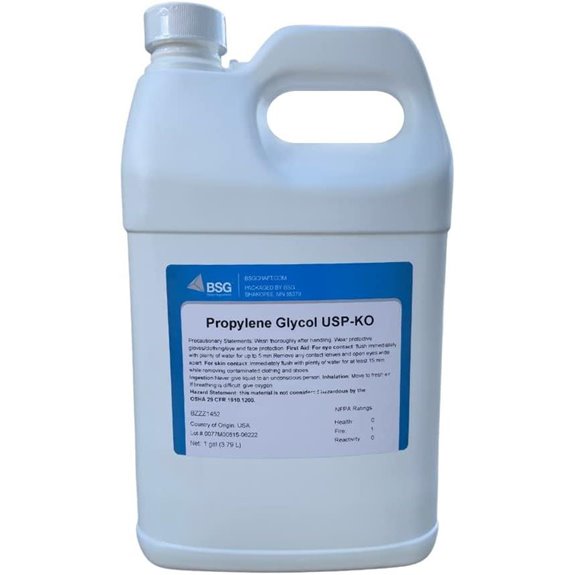 | Versatile Food-Grade | Application Type: Food industry, household, chillers | Purity Level: 99% | Packaging Size: 1 Gallon | VIEW LATEST PRICE | Read Our Analysis |
| Duda Energy 1 Gal Food Grade Propylene Glycol | 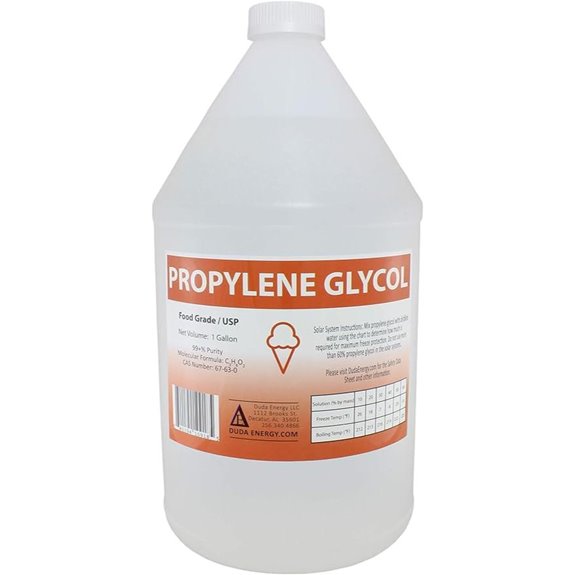 | High Purity Standard | Application Type: Food, cosmetic, anti-freeze | Purity Level: 99.5+% | Packaging Size: 1 Gallon | VIEW LATEST PRICE | Read Our Analysis |
| SMPLY Propylene Glycol USP Grade 34.5 lbs Sealed Containers | 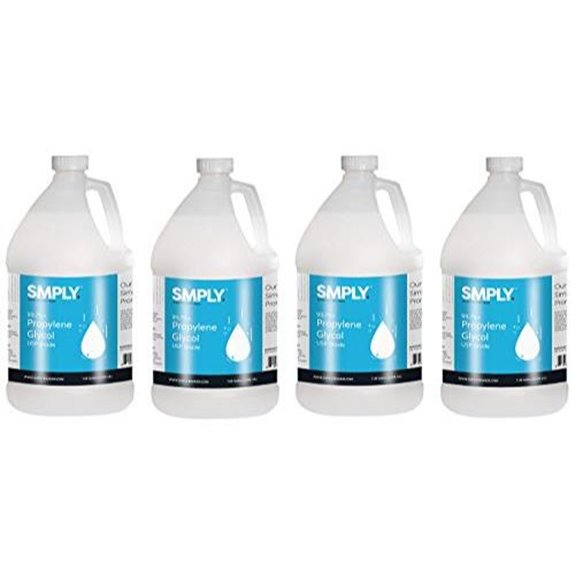 | Bulk Reliable Choice | Application Type: Food, cosmetic, humidor | Purity Level: 99.9+% | Packaging Size: 34.5 lbs (4 x 1-Gallon containers) | VIEW LATEST PRICE | Read Our Analysis |
| ComStar ProFrost I-30 Heat Transfer Fluid (5 Gallon) | 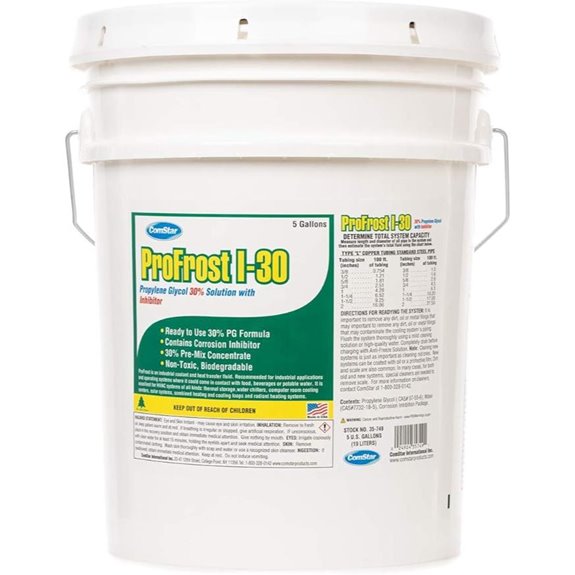 | Industrial Power | Application Type: Industrial chillers, HVAC, solar, heating/cooling | Purity Level: Not specified explicitly, but formulated for industrial use | Packaging Size: 5 Gallons | VIEW LATEST PRICE | Read Our Analysis |
| SMPLY. USP Food Grade 99.9% Pure Propylene Glycol 32 oz | 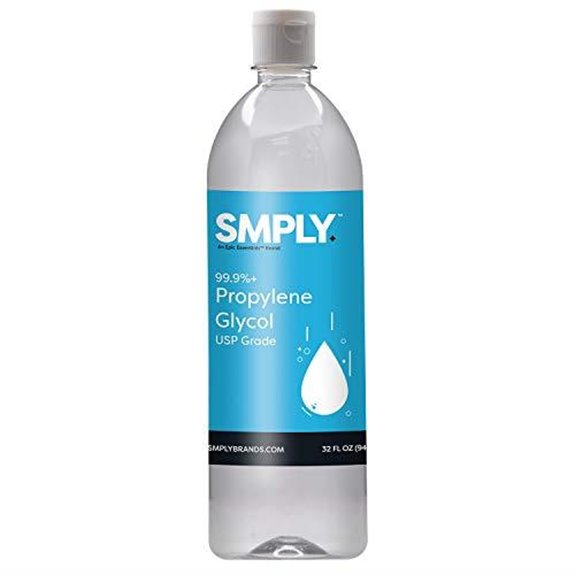 | Compact Quality | Application Type: Food, cosmetic, humidors | Purity Level: 99.9% | Packaging Size: 32 oz (1 Quart) | VIEW LATEST PRICE | Read Our Analysis |
More Details on Our Top Picks
Propylene Glycol USP Food Grade 1 Gallon
Propylene Glycol USP Food Grade, 1 Gallon, stands out as a versatile, food-safe liquid perfect for those seeking reliable heat transfer or antifreeze solutions. This 99% pure, kosher, non-GMO product from BSG is NSF certified, ensuring quality and safety.
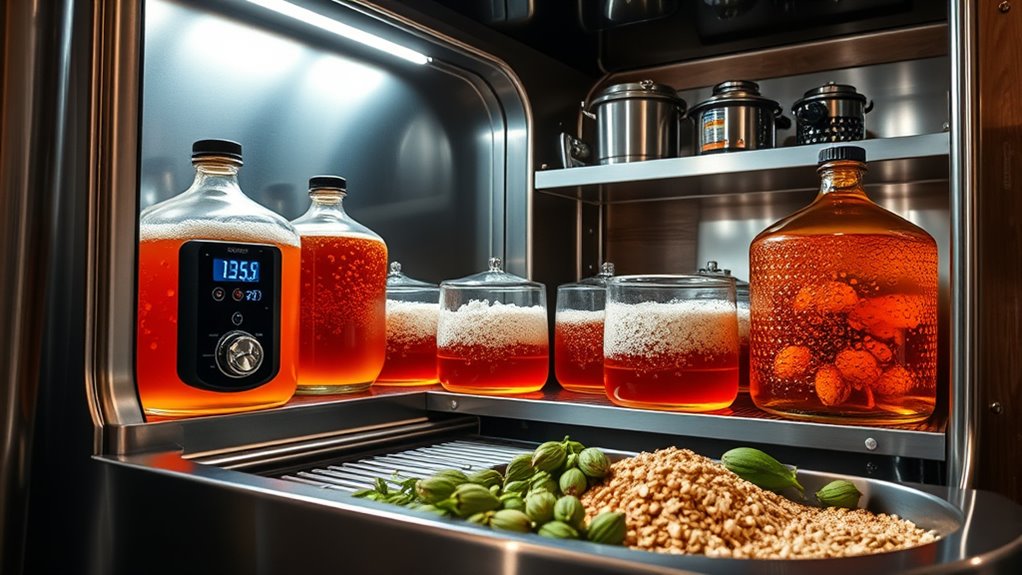
Its uses span from chilling systems—like Grainfather, IceMaster, and DraftMaster—to food industry applications such as wineries, microbreweries, and meatpacking plants. Plus, it plays a key role in household items, acting as a stabilizer, humectant, or thickener in cosmetics.
With proper dilution and an inhibitor system that prevents rust and corrosion, it’s an adaptable choice for many thermal needs.
- Application Type:Food industry, household, chillers
- Purity Level:99%
- Packaging Size:1 Gallon
- Certification:USP, NSF, Kosher, NON-GMO
- Color/Physical State:Clear
- Usage Compatibility:Metal resistance, food contact, household
- Additional Feature:Corrosion inhibitor system
- Additional Feature:Suitable for household products
- Additional Feature:Not for pharmaceutical use
Duda Energy 1 Gal Food Grade Propylene Glycol
For those seeking a dependable, high-purity standard in their glycol chillers for 2026, Duda Energy’s 1-gallon food-grade propylene glycol truly stands out. This product boasts over 99.5% purity, meeting strict food-grade and USP standards—perfect if you need safe, non-toxic cooling solutions.
It’s ideal in food and cosmetic industries or as an environmentally friendly antifreeze. The viscous, clear liquid is packaged in a convenient 1-gallon jug with a reeked pouring spout, plus options for larger containers like a 5-gallon pail. Duda Energy’s glycol promises high quality, American-made craftsmanship, and you can always request their Certificate of Analysis for peace of mind.
- Application Type:Food, cosmetic, anti-freeze
- Purity Level:99.5+%
- Packaging Size:1 Gallon
- Certification:Food Grade, USP
- Color/Physical State:Clear/Translucent
- Usage Compatibility:Food, cosmetic, eco-friendly antifreeze
- Additional Feature:Clear/Translucent appearance
- Additional Feature:Reeked pouring spout
- Additional Feature:Higher purity (~99.95%)
SMPLY Propylene Glycol USP Grade 34.5 lbs Sealed Containers
When selecting a bulk reliable choice for glycol chillers in 2026, SMPLY Propylene Glycol USP Grade stands out as a trusted option for professionals. With over 99.9% purity, it guarantees high-quality performance across multiple applications. Packaged in four sealed, resealable 1-gallon containers—totaling 34.5 pounds—it’s easy to handle and store.
This food-grade glycol is versatile: it maintains moisture and prevents caking, making it perfect for humidor systems, cosmetics, or flavor carriers. Its non-toxic nature assures safe use in marine antifreeze, refrigeration, or cosmetic formulations. For reliable, safe, and efficient glycol, SMPLY offers a practical choice for this growing market.
- Application Type:Food, cosmetic, humidor
- Purity Level:99.9+%
- Packaging Size:34.5 lbs (4 x 1-Gallon containers)
- Certification:USP Grade
- Color/Physical State:Liquid
- Usage Compatibility:Moisture, flavor, cosmetic, marine antifreeze
- Additional Feature:Resealable HDPE containers
- Additional Feature:Ideal for humidor systems
- Additional Feature:Odorless and tasteless
ComStar ProFrost I-30 Heat Transfer Fluid (5 Gallon)
Designed for industrial powerhouses, the ComStar ProFrost I-30 Heat Transfer Fluid stands out as a reliable choice for 2026 glycol chillers. This propylene glycol solution is prediluted to 30%, making it easy to use straight from the container—no mixing headaches here!
Made in the USA, it’s perfect for applications like chillers, refrigeration, thermal storage, and heating/cooling systems. The formula features advanced corrosion inhibitors to keep systems running smoothly, preventing clogs and rust. Available in 5 and 55-gallon sizes, with customization options such as green color or added corrosion protection, it’s flexible enough for many setups.
- Application Type:Industrial chillers, HVAC, solar, heating/cooling
- Purity Level:Not specified explicitly, but formulated for industrial use
- Packaging Size:5 Gallons
- Certification:Not specified explicitly
- Color/Physical State:Not specified (generally clear)
- Usage Compatibility:Industrial systems, heat transfer, solar, HVAC
- Additional Feature:Custom solution ratios
- Additional Feature:Made in USA
- Additional Feature:Available with corrosion inhibitor
SMPLY. USP Food Grade 99.9% Pure Propylene Glycol 32 oz
This compact quality propylene glycol offers a reliable solution for those needing a high-purity additive in manageable quantities. The SMPLY USP Food Grade 99.9% Pure Propylene Glycol comes in a convenient 32 oz (1 quart) HDPE bottle with a handle and resealable lid—perfect for easy storage and handling.
Its high purity (99.9%) guarantees safety and versatility, making it suitable for food, cosmetics, and humidity control. Made in the USA, it’s odorless and tasteless, adding peace of mind.
Whether used as a moisture extender, emulsifier, or humidor component, this product offers consistency and trust—an ideal choice for those who want quality without excess bulk.
- Application Type:Food, cosmetic, humidors
- Purity Level:99.9%
- Packaging Size:32 oz (1 Quart)
- Certification:Food Grade, USP
- Color/Physical State:Clear, liquid
- Usage Compatibility:Food, cosmetic, humidor, skincare
- Additional Feature:Resealable bottle with handle
- Additional Feature:Long-standing industry experience
- Additional Feature:Suitable for cosmetics use
Factors to Consider When Choosing Glycol Chillers
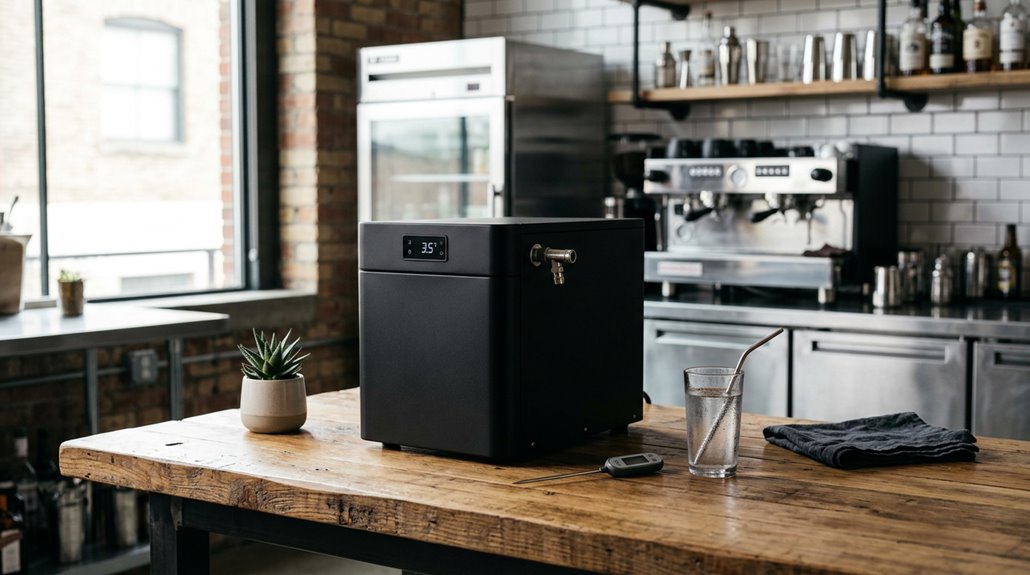
When selecting a glycol chiller, it’s essential to look at how well it matches your existing system, especially regarding compatibility and performance needs. Factors like glycol concentration levels, temperature regulation range, and corrosion prevention features all play a role in ensuring reliable operation.
Don’t forget to evaluate chemical purity standards, as these impact both safety and equipment longevity. A little homework now saves headaches later!
Compatibility With Systems
Compatibility with existing systems is an essential piece of the puzzle when selecting a glycol chiller—think of it as making sure all your ingredients play nice before cooking up the perfect cooling solution. It’s vital to verify that the chiller fits your specific setup, whether it’s a brewery, winery, or industrial plant. Mismatched equipment can lead to poor heat transfer or even system failure.
Things to check include material compatibility; metals like copper or stainless steel usually work well—and whether the glycol’s concentration levels align with the system’s design. Also, consider the intended application, as different uses demand different glycol formulations. Ensuring your chiller’s properties, such as viscosity and thermal conductivity, match your system’s needs, is essential for smooth operation and long-term success.
Glycol Concentration Levels
Choosing the right glycol concentration for your chiller is a balancing act, think of it as finding the Goldilocks perfect mix— not too thin and not too thick. Typically, glycol levels range from 30% to 60%, with adjustments depending on climate and system needs.
A higher concentration offers better freeze protection, which is vital in colder environments, but it can slow heat transfer, meaning your system might run less efficiently. Lower concentrations, like 20% or less, may save energy but risk freezing and system damage during cold snaps. Regular testing and adjustments, such as quarterly checks, are essential to stay within ideal ranges and avoid issues such as corrosion or blockages.
Whether you’re in a mild or frigid climate, getting the balance just right helps keep systems running smoothly and efficiently.
Temperature Regulation Range
Understanding the temperature regulation range is like knowing the perfect recipe for your glycol chiller. Get it right, and everything runs smoothly; get it wrong, and that’s when things start to freeze up or underperform.
Glycol chillers generally operate within a specific window, often between 20°F to 32°F (-6°C to 0°C), to prevent freezing while still efficiently cooling. The concentration of propylene glycol in the mixture directly impacts this range: more glycol means colder capabilities, down to about -50°F (-45°C). But for peak performance, factors like flow rate matter too. Slower flow can improve heat exchange and stabilize temperatures.
Regular monitoring and adjustment of the glycol mixture are essential, especially when thermal loads fluctuate. This helps ensure the system stays within its ideal zone without turning into an icy mess!
Corrosion Prevention Features
Securing your glycol chiller against corrosion is like giving it a strong shield, all about protecting the delicate metal parts that keep everything running smoothly. Many glycol formulations include specialized corrosion inhibitors designed to combat rust in metals like aluminum, brass, copper, and steel. But beware, not all inhibitors are created equal; some work better with certain metals than others. It’s wise to select a glycol solution that clearly states its protective capabilities.
Regular monitoring and maintenance are key—checking pH levels and testing for corrosion can prevent costly surprises down the line. Choosing a chiller with proven corrosion resistance features not only extends system life but also reduces maintenance costs. In brief, investing in corrosion prevention is a surefire way to keep your system humming happily!
Chemical Purity Standards
When it comes to keeping your glycol chiller performing at its best, chemical purity standards play a starring role. Typically, a minimum purity of 99% guarantees efficient heat transfer and prevents corrosion, which is crucial for longevity. Propylene glycol should be food grade, especially if the system contacts edible products or beverages, as certified by regulatory bodies. The presence of corrosion inhibitors is key; they protect metal parts from rust and wear, extending the chiller’s lifespan.
Purity levels directly influence thermal conductivity and freezing point depression, making higher purity better for performance. Regularly verifying these standards with Certificates of Analysis (COA) keeps everything compliant and safe. Bottom line, invest in chillers with strict purity standards and stay vigilant—your system’s health depends on it!
Ease Of Maintenance
Choosing the right glycol chiller often boils down to how easy it is to keep it running smoothly. Maintenance should feel less like a chore and more like routine upkeep. Models with corrosion inhibitors in the glycol help reduce corrosion and extend system life, meaning less frequent checks. Easy access to key parts—pumps, heat exchangers, reservoirs—makes inspections and repairs faster. A clear manual with step-by-step directions keeps everything straightforward, even for those less experienced.
Modern chillers may also feature monitoring systems that alert operators to temperature or pressure issues early, catching problems before they escalate. Combining these features can save time, reduce downtime, and prevent costly repairs. This makes maintenance less challenging and more manageable, no matter the skill level.
Frequently Asked Questions
Are Glycol Chillers Environmentally Friendly and Recyclable?
Glycol chillers are generally eco-friendly when designed with sustainable refrigerants like propylene glycol or environmentally safer options. However, their recyclability hinges on construction materials and proper disposal. Think of it like a reusable water bottle; if made from recyclable plastics or metals and disposed of correctly, they minimize environmental impact.
Benefits include reduced energy consumption and fewer harmful emissions, but proper maintenance and disposal are key to ensuring they remain environmentally responsible.
How Often Should Glycol Be Replaced or Reconditioned?
Glycol should generally be replaced or reconditioned every 1 to 3 years, depending on usage and maintenance. Regular testing for freeze point, pH, and corrosion inhibitors helps determine when replenishment is needed. Think of it like a good diet: stale glycol hampers efficiency and could corrode your system.
Keep a maintenance schedule, monitor performance, and consult manufacturers’ guidelines to keep your chiller running smoothly!
Can Glycol Chillers Operate Efficiently in Extreme Temperatures?
Glycol chillers are surprisingly hardy, but even they shiver in extreme temperatures. In very cold conditions, their efficiency drops because the glycol may freeze or flow sluggishly, much like molasses in winter. Conversely, heat can strain the system, causing compressor wear.
To keep them running smoothly, insulate pipes. Use heaters if temperatures drop below -15°F. Regularly check glycol levels and viscosity. This keeps the chillers humming, no matter the weather!
What Safety Precautions Are Necessary When Handling Glycol?
Handling glycol safely is essential. Always wear protective gear—gloves, goggles, and lab coats—to prevent skin and eye contact, as glycol can cause irritation. Keep the glycol container tightly sealed when not in use, store it in well-ventilated areas away from heat sources, and have spill kits ready.
And, always follow the manufacturer’s instructions on proper disposal and emergency procedures. Because safety first, even with a chemical as friendly as it sounds!
Do Different Glycol Grades Impact Chiller Performance?
Different glycol grades can drastically impact chiller performance. Think of it like choosing the right fuel for a race car. Higher-purity grades, such as USP or food-grade glycol, often provide better thermal conductivity and stability, reducing the risk of corrosion and freezing.
Conversely, lower grades may cause inefficient heat transfer and equipment wear. It’s crucial to match glycol grade with your system’s specifications to optimize cooling efficiency and prolong chiller lifespan.