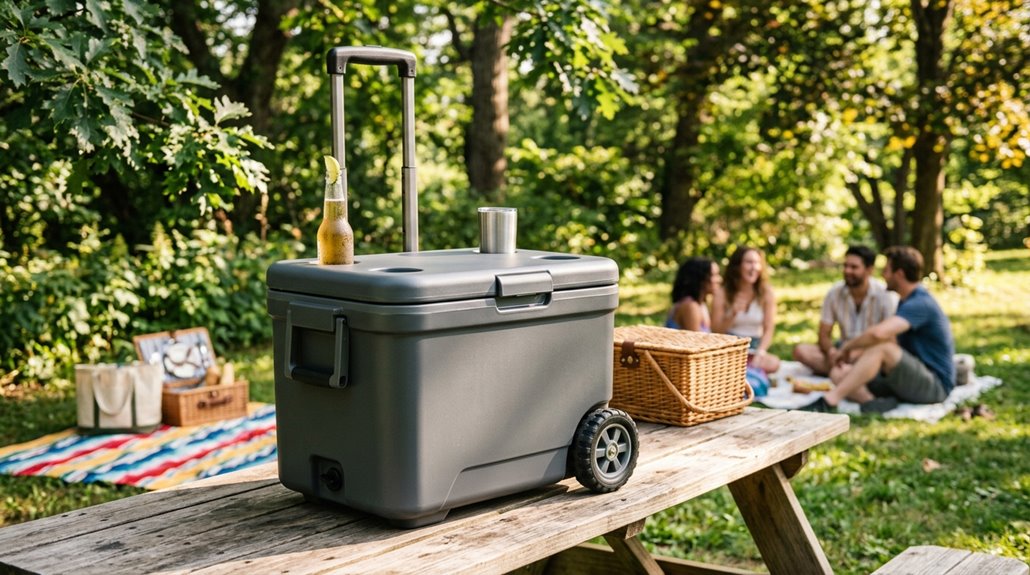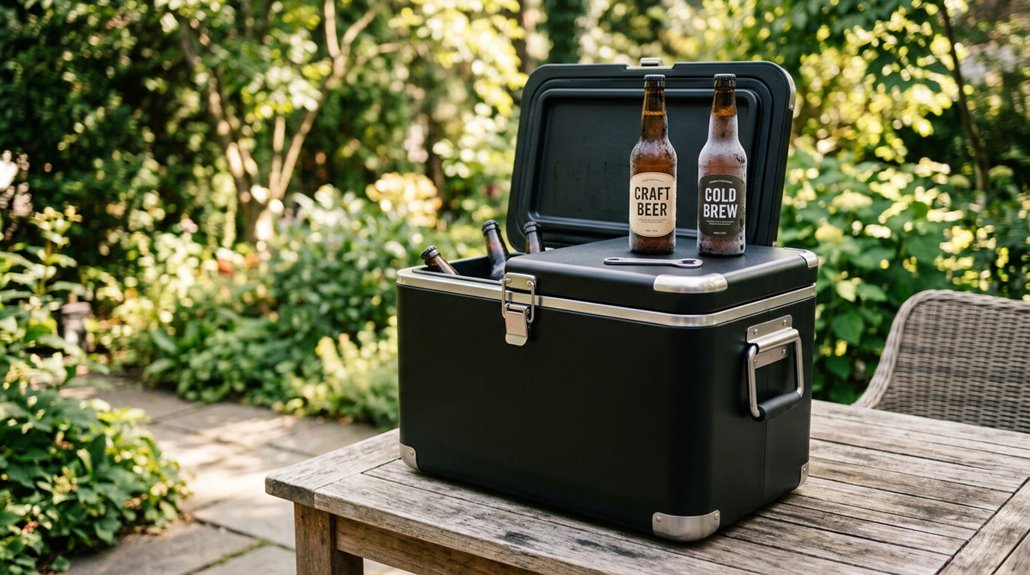
The 2026 lineup of 12 V coolers blends power, portability, and smart features, making them perfect for road trips, camping, or a backyard grill station.
Wagan EL6214 offers 14 L of dual‑mode cooling and heating, while VEVOR 21QT adds app‑controlled temperature tweaks.
Budget‑friendly SUPER DEAL Pro delivers 28 QT of thermoelectric performance. BougeRV’s 42 QT unit handles both refrigeration and freezing, and the compact EKOJUCE 11 Qt fits tight spaces.
Key factors—capacity, energy draw, insulation, and control options—determine which model fits your adventure.
The right choice can keep food fresh for days without draining your battery.
Ready to compare specs and see which cooler earns a spot in your gear?
At a Glance
- Choose a compressor cooler (e.g., VEVOR 21QT, BougeRV 42Qt) for rapid chilling to 32°F in 10‑25 minutes and sub‑zero capabilities.
- Opt for a thermoelectric model (e.g., Wagan EL6214, SUPER DEAL Pro 28QT) for lightweight, dual‑mode cooling/heating with up to 48 hours of cold retention.
- Prioritize units with built‑in battery‑management or ECO modes to minimize power draw and protect vehicle batteries.
- Look for portability features: handles, shoulder straps, compact dimensions, and weight under 12 lb for easy transport.
- Ensure durability with rotomolded shells, low‑noise operation (≤45 dB), and certifications (CE/FCC) for reliable outdoor use.
VEVOR 21QT Car Refrigerator with APP Control, Portable Freezer
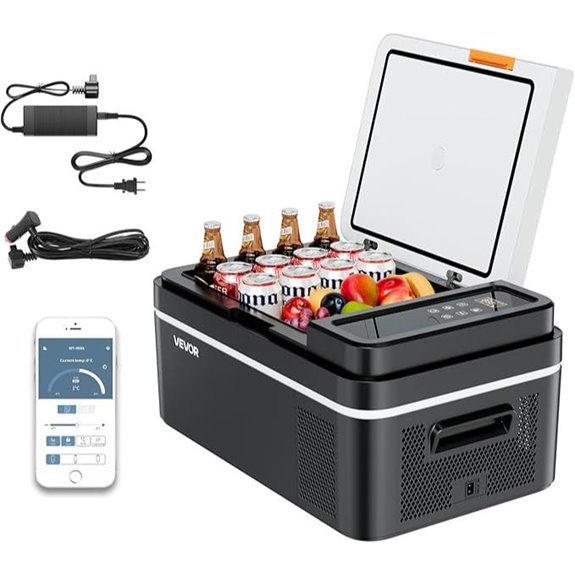
Travelers and weekend adventurers alike will love the VEVOR 21QT Car Refrigerator, a smart‑connected cooler that keeps food fresh on the road. It runs on 12/24 V DC or 100‑240 V AC, holds 21 qt (20 L) of supplies, and swings from –4 °F to 68 °F. The compressor drops a warm 68 °F to a cool 32 °F in about 25 minutes, with ECO for efficiency and MAX for rapid chill.
Key features
- Touchscreen panel and mobile app for remote temperature tweaks.
- Three‑level battery management reduces draw on a vehicle’s power.
- Matte exterior, sealing strip, and ventilation openings protect against loss and heat.
Typical uses
- RV trips – fits behind seats or in a truck bed.
- Boating – tolerates vibration, runs on DC.
- Camping – portable freezer keeps fish fresh.
Weight is 22.9 lb; dimensions 24.5 × 14.9 × 11.0 in. Energy use is modest at 0.39 kWh per year, and a manual defrost keeps things simple. A solid, versatile companion for any long‑haul adventure!
| Wagan EL6214 14L Portable Car Thermoelectric Cooler/Warmer | 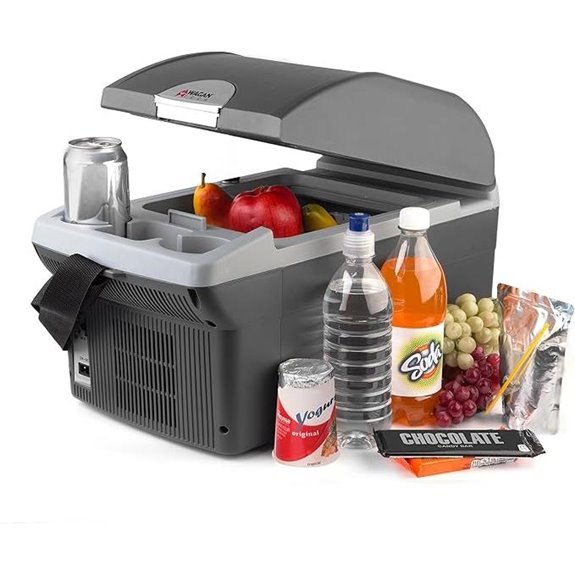 | Compact Powerhouse | Capacity: 14 L | Power Source: 12 V DC (car outlet) | Cooling Method: Thermoelectric | VIEW LATEST PRICE | Read Our Analysis |
| VEVOR 21QT Car Refrigerator with APP Control Portable Freezer |  | Smart Connected | Capacity: 20 L (21 QT) | Power Source: 12/24 V DC & 100‑240 V AC | Cooling Method: Compressor | VIEW LATEST PRICE | Read Our Analysis |
| SUPER DEAL Pro 28QT Portable Electric Cooler & Warmer | 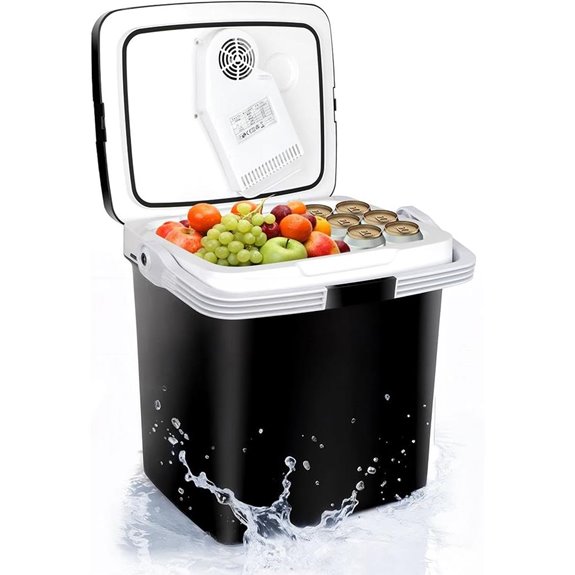 | Budget-Friendly Pick | Capacity: 26 L (28 QT) | Power Source: 12 V DC | Cooling Method: Thermoelectric | VIEW LATEST PRICE | Read Our Analysis |
| BougeRV 12V Portable Refrigerator Freezer 42 Qt | 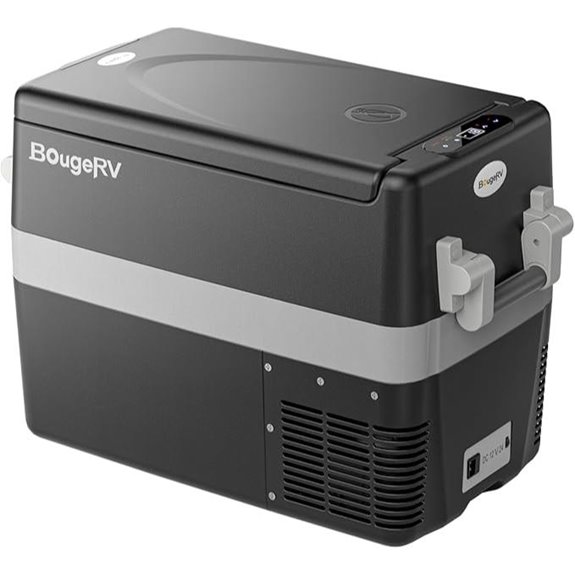 | Heavy-Duty Performer | Capacity: 40 L (42 QT) | Power Source: 12/24 V DC & 110‑240 V AC | Cooling Method: Compressor | VIEW LATEST PRICE | Read Our Analysis |
| EKOJUCE 12V Car Refrigerator 11 Quart Portable Cooler | 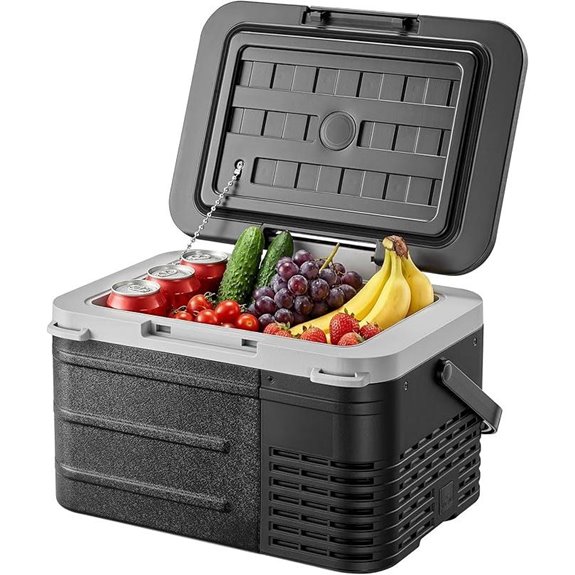 | Space Saver | Capacity: 10 L (11 QT) | Power Source: 12/24 V DC & 100‑240 V AC | Cooling Method: Compressor | VIEW LATEST PRICE | Read Our Analysis |
More Details on Our Top Picks
Wagan EL6214 14L Portable Car Thermoelectric Cooler/Warmer
Ideal for road‑trippers who need a compact powerhouse, the Wagan EL6214 14 L portable car thermoelectric cooler/warmer delivers dual‑mode temperature control without sacrificing space. It plugs into any 12 V DC outlet, and a 6‑foot cord lets you reach the back seat or front console.
The unit cools 32‑36 °F below ambient and heats up to 140 °F, keeping up to 12 soda cans or water bottles at the right temperature.
Key features
- Hot/cold/off switch with indicator lights.
- Built‑in shoulder strap for easy carry.
- UL‑listed safety certification.
Usage tip: Start the cooler 10 minutes before departure; the thermoelectric plates need a brief warm‑up to hit target temps. Optional AC adapter (item 9903) lets you use it at home or in a hotel, expanding its utility beyond the road.
And the compact 14 L size fits neatly in a vehicle’s center console, making snack storage a breeze.
- Capacity:14 L
- Power Source:12 V DC (car outlet)
- Cooling Method:Thermoelectric
- Temperature Range:-32 °F to –36 °F below ambient (cool) / up to 140 °F (warm)
- Portability Features:Shoulder strap, 6‑ft cord
- Power Consumption (Eco Mode):Not specified (thermoelectric low draw)
- Additional Feature:UL safety certification
- Additional Feature:6‑foot DC power cord
- Additional Feature:Optional AC adapter sold separately
VEVOR 21QT Car Refrigerator with APP Control Portable Freezer
Travelers and weekend adventurers alike will love the VEVOR 21QT Car Refrigerator, a smart‑connected cooler that keeps food fresh on the road. It runs on 12/24 V DC or 100‑240 V AC, holds 21 qt (20 L) of supplies, and swings from –4 °F to 68 °F. The compressor drops a warm 68 °F to a cool 32 °F in about 25 minutes, with ECO for efficiency and MAX for rapid chill.
Key features
- Touchscreen panel and mobile app for remote temperature tweaks.
- Three‑level battery management reduces draw on a vehicle’s power.
- Matte exterior, sealing strip, and ventilation openings protect against loss and heat.
Typical uses
- RV trips – fits behind seats or in a truck bed.
- Boating – tolerates vibration, runs on DC.
- Camping – portable freezer keeps fish fresh.
Weight is 22.9 lb; dimensions 24.5 × 14.9 × 11.0 in. Energy use is modest at 0.39 kWh per year, and a manual defrost keeps things simple. A solid, versatile companion for any long‑haul adventure!
- Capacity:20 L (21 QT)
- Power Source:12/24 V DC & 100‑240 V AC
- Cooling Method:Compressor
- Temperature Range:–4 °F to 68 °F
- Portability Features:Touchscreen, app control, carry handles
- Power Consumption (Eco Mode):0.39 kWh yr⁻¹ (low draw)
- Additional Feature:Remote app monitoring
- Additional Feature:Manual defrost system
- Additional Feature:Matte finish exterior
SUPER DEAL Pro 28QT Portable Electric Cooler & Warmer
The SUPER DEAL Pro 28QT Portable Electric Cooler & Warmer is the budget‑friendly pick for anyone who needs a reliable 12V fridge on the road. It holds 26 L (about 36 cans or two‑liter bottles) inside a heavy‑duty polyester shell with rotomolded corners, so drops won’t dent it.
Thermoelectric cooling keeps items cold for up to 48 hours, while a built‑in heater maintains up to 90 °F for lunches. The pressure‑injected polyurethane foam insulation maximizes ice retention, and the odor‑resistant lining wipes clean with a damp cloth.
Key specs
- Dimensions 9.3 × 11.61 × 13.19 in, weight 12 lb.
- Net capacity 0.92 ft³, 26 L interior.
- Folding ergonomic handle, lockable lid for travel safety.
Because it runs on 12 V DC, it plugs straight into a vehicle’s cigarette lighter or auxiliary port—perfect for camping, fishing trips, or a beach day. The unit’s sleek design fits under a seat, yet the sturdy construction feels rugged enough for a worksite. Overall, it delivers solid performance without breaking the bank.
- Capacity:26 L (28 QT)
- Power Source:12 V DC
- Cooling Method:Thermoelectric
- Temperature Range:Cold up to 48 h, Warm up to 90 °F
- Portability Features:Folding handle, lockable lid
- Power Consumption (Eco Mode):Not specified (thermoelectric)
- Additional Feature:Rotomolded durable shell
- Additional Feature:Odor‑resistant interior lining
- Additional Feature:Folding ergonomic handle
BougeRV 12V Portable Refrigerator Freezer 42 Qt
BougeRV’s 42‑quart 12V Portable Refrigerator Freezer stands out as a heavy‑duty performer for RV owners and over‑landers who need reliable, on‑the‑go cooling. It handles both fridge and freezer duties, covering –4 °F to 50 °F, and drops from 77 °F to 32 °F in just 15 minutes, reaching –4 °F within an hour.
Key specs
- 42 qt chest‑style, freestanding unit
- Dual voltage: 12/24 V DC and 110‑240 V AC
- ECO mode < 45 W, MAX mode < 1 kWh/day
Features
- Quiet operation at ~45 dB
- Three‑level battery monitor protects vehicle power
- CE/FCC certified, two‑year compressor warranty
Practical tips
- Use ECO mode for long trips, switch to MAX when rapid cooling is needed.
- Keep the unit level to guarantee compressor efficiency.
- Connect to a deep‑cycle battery for extended off‑grid use.
And the chest design makes loading groceries a breeze—just slide items in, set the temperature, and enjoy fresh or frozen food without fuss.
- Capacity:40 L (42 QT)
- Power Source:12/24 V DC & 110‑240 V AC
- Cooling Method:Compressor
- Temperature Range:–4 °F to 50 °F
- Portability Features:Chest design, freestanding, 3‑level battery monitor
- Power Consumption (Eco Mode):< 45 W (ECO)
- Additional Feature:45 dB quiet operation
- Additional Feature:3‑level battery monitor
- Additional Feature:2‑year compressor warranty
EKOJUCE 12V Car Refrigerator 11 Quart Portable Cooler
Compact road trips become smoother when an 11‑quart cooler fits snugly in a car’s footwell, and the EKOJUCE 12V Car Refrigerator is a true space‑saver. Its 16.3 × 12.2 × 11‑inch footprint and 17‑pound weight make it easy to slide under a seat, while the detachable handle adds portable convenience.
The unit cools from 68 °F to 32 °F in just ten minutes—no load—thanks to an efficient compressor and two power modes: energy‑saving ECO and high‑power MAX.
Key features
- Dual input: 100‑240 V AC and 12/24 V DC, with a dedicated adapter for trucks, RVs, or outdoor outlets.
- Shock‑proof, <40 dB noise, and stable operation on a 45° slope.
- 3‑level voltage protection, power‑loss prevention, and compressor delay memory.
Setup tip: keep the unit upright for 24 hours before first use, then plug in, select mode, and enjoy consistent cooling. Two years of technical support round out the package.
- Capacity:10 L (11 QT)
- Power Source:12/24 V DC & 100‑240 V AC
- Cooling Method:Compressor
- Temperature Range:–4 °F to 68 °F
- Portability Features:Detachable handle, shock‑proof design
- Power Consumption (Eco Mode):ECO mode (energy‑saving) – exact value not listed
- Additional Feature:Shock‑proof seismic design
- Additional Feature:3‑level voltage protection
- Additional Feature:Power‑off memory function
Factors to Consider When Choosing 12V Coolers
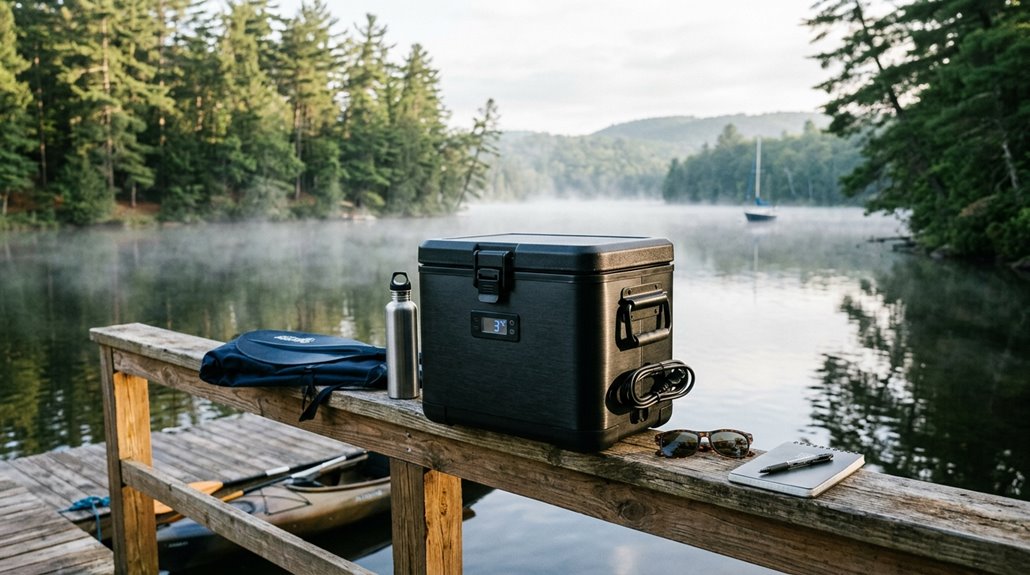
When picking a 12V cooler, the first thing to gauge is capacity versus physical size, that is, how many liters of storage you need compared to the space it will occupy in a vehicle. Next, check power source compatibility and cooling technology type, ensuring the unit works with your car’s 12 V system and uses a compressor or thermoelectric method that matches your temperature‑range flexibility and energy‑consumption efficiency goals.
And remember, a larger fridge isn’t always better if it guzzles power. A compact model that stays cool for 12 hours on a single charge can be a lifesaver on long trips!
Capacity Capacity vs. Size
Capacity isn’t just a number on a spec sheet; it’s the balance between how much you need to keep cold and how much space you actually have. When choosing a 12 V cooler, match capacity to use‑case: an 11‑quart model fits tight trunks and is easy to lug, while a 42‑quart unit holds up to 36 cans and bulkier meals for multi‑day trips.
Key considerations
- Storage need – Count cans, bottles, or food packs; larger quart ratings usually translate to more slots.
- Vehicle space – Measure the compartment; a cooler should sit without blocking seats or pedals.
- Weight – A 42‑quart cooler can weigh approximately 22.9 lb, affecting loading and handling.
Balancing these factors prevents a cooler that’s either too cramped for the cargo or too bulky for the ride.
Power Source Compatibility
Even if a cooler can plug into a car’s cigarette lighter, the real magic shows up when it also accepts wall power, because that flexibility lets a traveler swing from a campsite to a kitchen without hunting for an outlet.
Key considerations for power-source compatibility include:
- Dual-voltage support: models that handle 12 V/24 V DC and 100-240 V AC cover almost any scenario.
- Built-in battery management: look for systems that throttle draw, keeping consumption low while preserving temperature.
- Adapter set: a dedicated AC-to-DC adapter simplifies switching; keep it handy in the glovebox.
And don’t forget slope performance: a cooler that stays steady on a 30° incline avoids spills on uneven ground.
Choosing a unit with these features means seamless changes from road trips to office lunches, eliminating the dreaded “no outlet” panic.
Cooling Technology Type
Power‑source flexibility is great, but the next decision point is how the cooler actually chills its contents. Two main technologies dominate: thermoelectric and compressor systems.
Thermoelectric coolers
- Light, compact, ideal for short trips.
- Modest drop, typically 32‑36 °F below ambient.
- Slower cooling; may need 30‑45 minutes to reach target.
- Less efficient in hot weather, so battery drain can rise.
Compressor coolers
- Heavier, built for extended adventures.
- Wide range, often –4 °F to 68 °F.
- Rapid chill; some models hit 32 °F from room temperature in approximately 25 minutes.
- Energy‑saving modes cut draw, keeping power use reasonable.
Choose thermoelectric for casual, lightweight use. Pick compressor when you need fast, low‑temperature performance on longer outings.
Temperature Range Flexibility
How far should a 12‑V cooler be able to swing its temperature? The answer often determines whether the unit can simply keep a six cold or actually freeze a pizza for a weekend trek. A wide span, say ‑4°F to 68°F, covers both refrigeration and freezing, letting users store ice cream, fresh produce, or chilled drinks without a second device.
Key flexibility points include:
- Low‑end capability – maintaining 32‑36°F below ambient keeps perishables fresh for days.
- High‑end capability – heating to 140°F is handy for warm meals on the road.
- Rapid drop – reaching 32°F from 68°F in 10‑25 minutes prevents spoilage during long drives.
And when a cooler includes an ECO mode, it can preserve those extremes while sipping less power. The right range makes the unit adaptable, not just a simple cooler.
Energy Consumption Efficiency
When weighing a 12‑V cooler, energy‑consumption efficiency often decides whether the unit will be a road‑trip companion or a drain on the vehicle’s battery. Buyers should first check annual draw; some models sip as little as 0.39 kWh per year, which translates into pennies of electricity and leaves plenty of juice for other gadgets.
- ECO mode reduces power while keeping temperature steady, extending runtime on a limited battery.
- Compressor advantage: fast cooling (68 °F, 32 °F in ~10 min) means the compressor runs briefly, saving energy overall.
- Battery‑management system: three‑level protection prevents deep discharge, automatically shutting off when voltage falls.
- Insulation quality: high‑R‑value walls cut heat leakage, so the cooler holds cold longer with less compressor effort.
Choosing a unit that balances these features guarantees long trips stay cool without constantly recharging the car’s battery.
Portability Features
A well‑chosen 12 V cooler should feel like a lightweight sidekick rather than a burdensome brick, and portability is the key factor that turns a road‑trip into a hassle‑free adventure.
Key portability considerations
- Handles & straps: Built‑in handles or shoulder straps let users sling the unit over a shoulder or grip it like a tote. This makes it perfect for camping or picnics.
- Weight: Lighter models, under 5 lb/2.3 kg, reduce fatigue on long hikes, while still housing enough insulation.
- Compact footprint: Dimensions that slip into a trunk or behind a seat, such as 12 × 9 × 8 in, maximize cargo space.
- Lockable lids: Secure closures prevent spills and keep contents safe during bumpy rides.
Quick checklist
- Measure interior volume versus external size.
- Test strap comfort and handle grip.
- Verify lid lock mechanism.
Choosing a cooler that checks these boxes guarantees effortless transport without sacrificing storage.
Durability and Build Quality
Portability may win the day on a road trip, but a cooler that can’t survive a tumble or a rainstorm won’t last long enough to earn its keep. Durability in 12 V coolers stems from heavy‑duty construction: rotomolded shells and high‑density insulation act like a shield against bumps, drops, and weather. A matte‑finish polyester exterior resists scratches and impacts, while pressure‑injected commercial‑grade polyurethane foam keeps the cold in and the power draw low.
Key build features to check
- Lockable lids: prevent accidental opening.
- Ergonomic handles: reduce strain during loading.
- Noise rating 40–45 dB: quieter operation means less wear on moving parts.
Choosing a model with these attributes feels like getting a rugged, reliable companion for every adventure.
Control Interface Options
Is the cooler’s control panel intuitive enough for a quick grab‑and‑go, or does it demand a mini‑manual before you can set a temperature? A touchscreen interface offers precise temperature tweaks and real‑time internal readings, which feels like a mini‑command center in a backpack. Some models go further, adding app control so a smartphone can monitor and adjust settings remotely. Great for road trips where you’re not always beside the unit.
Key interface options to weigh:
- Touchscreen – visual feedback, fine‑tuned set points.
- App‑based control – Bluetooth or Wi‑Fi, remote alerts.
- Physical switches – hot/cold/off toggles with indicator lights for instant status.
Multiple operational modes (ECO, MAX) let users balance energy draw and cooling speed. Built‑in battery‑management systems curb power consumption, extending run time without sacrificing performance.
Frequently Asked Questions
Can I Use a 12V Cooler With a Standard Household Outlet?
A 12‑V cooler can run from a standard household outlet only with a proper step‑down converter that transforms 120 V AC to 12 V DC at the required amperage.
- Choose a regulated power supply rated for the cooler’s current, for example, 2 A.
- Verify polarity and plug type. Connect securely, then test.
Without a converter, the voltage is too high and will destroy the cooler.
How Long Does a 12V Cooler Run on a Fully Charged Car Battery?
A fully charged 12 V car battery typically holds 48–60 Ah, so a 12 V cooler drawing 2 A will run about 24–30 hours. A 5 A unit lasts roughly 9–12 hours, and a high‑draw 10 A model only 4–6 hours.
Quick guide:
- Check the cooler’s amperage rating.
- Divide battery Ah by that amperage.
- Adjust for temperature, age, and inverter losses.
And remember, a dead‑weight battery won’t keep the ice frozen forever!
Do These Coolers Require Regular Maintenance or Cleaning?
These coolers do need occasional upkeep, though the chores are modest. Regular maintenance includes:
- Cleaning the interior – wipe down shelves and walls every 2–3 weeks with mild soapy water; avoid abrasive scrubbers.
- Inspecting the evaporator coils – dust removal monthly, using a soft brush to keep heat exchange efficient.
- Checking seals and gaskets – look for wear and replace if cracked.
And a quick visual check of the power connector prevents surprise failures.
What Is the Best Way to Secure a Portable Cooler During Travel?
Secure a portable cooler during travel by anchoring it with straps, padding, and positioning.
- Strap it – use adjustable cargo or ratchet straps, threading them through the cooler’s built-in loops and tightening to the vehicle’s anchor points.
- Cushion – place foam or folded blankets around the cooler to absorb shocks.
- Level it – keep the cooler flat, avoiding steep inclines that could shift liquids.
And always double-check tension before departure!
Are There Noise Level Differences Between the Listed Models?
A gentle hum rises from the larger compressor units, while the compact thermoelectric models whisper barely audible.
- Compressor coolers – 45‑60 dB(A) at low speed, up to 70 dB(A) on high; the motor’s pulse‑width modulation creates a rhythmic thrum. The insulated shell can dampen vibration, making the quieter choice feel like a soft breeze rather than a bustling engine.
- Thermoelectric (Peltier) coolers – 30‑40 dB(A) consistently, because they lack a piston‑driven compressor.