Wash bottles immediately after use, soak in hot, soapy water, and scrub inside with a bottle brush. Rinse thoroughly and inspect for residue. For effective sterilization, use Star San (1 oz per 5 gallons, no rinse, 60-second contact). Alternatively, boil bottles for 10 minutes or bake at 350°F for 90 minutes. Always sanitize caps and corks—you can dunk caps briefly and soak corks in sanitizer for five minutes. Avoid common mistakes like incomplete coverage or using expired solutions. Use a bottle washer for faster results. A clean environment and proper timing prevent contamination. Different setups need different sanitizers—choose wisely. Helpful Hints: 1) Store cleaned bottles upside down in a dust-free area. 2) Sanitize right before filling to prevent recontamination. 3) Cover bottle openings with foil after sanitizing. 4) Check sanitizer expiration dates regularly. 5) Follow product instructions exactly. More details on optimizing your method await.
At a Glance
- Rinse bottles immediately after use to prevent residue buildup and ease cleaning.
- Soak bottles in hot, soapy water and scrub thoroughly with a bottle brush.
- Use a no-rinse sanitizer like Star San for 60 seconds to effectively sanitize without residue.
- Boil bottles for 10 minutes or bake at 350°F for 90 minutes to sterilize with heat.
- Sanitize caps and corks separately to prevent contamination during bottling.
Wash Bottles Before Sanitizing
Start by rinsing your beer bottles as soon as you finish using them to prevent dried beer residue and yeast buildup.
Then, soak them in hot, soapy water to loosen grime and make scrubbing easier. Use a bottle brush or sponge to clean the interior thoroughly, targeting stuck-on particles.
Soak bottles in hot, soapy water to loosen grime, then scrub the interior thoroughly with a bottle brush or sponge, focusing on stubborn residues.
After washing, inspect each bottle closely—any leftover debris can introduce contamination during brewing. Rinse well to remove soap film, which can also affect beer quality.
Finally, store cleaned bottles upside down in a dry, dust-free area to avoid moisture retention and airborne contaminants. Remember to sanitize bottle caps immediately before use to ensure a proper seal and prevent contamination.
Helpful Hint #1: Clean immediately after use—don’t let residue dry.
Helpful Hint #2: Use a narrow brush for deep, hard-to-reach areas.
Use Star San Correctly (No Rinsing!)
One widely used option for sanitizing beer bottles is Star San, a no-rinse sanitizer that kills bacteria and wild yeast on contact.
You mix 1 ounce per 5 gallons of water, making it fast, efficient, and safe for plastic and metal. After cleaning bottles thoroughly, you soak or spray them, ensuring full coverage.
Let them drain—don’t rinse—since rinsing can reintroduce contaminants. Just 60 seconds of contact time is all it takes.
- You trust science to protect your brew
- You skip unnecessary steps with confidence
- You save time without sacrificing safety
- You innovate your process with proven results
Using a reliable sanitizer like Star San is critical to preventing contamination and maintaining the quality of your beer.
Try Boiling Water for Full Sterilization
How do you guarantee your beer bottles are truly sterile without relying on chemicals?
Try boiling water for full sterilization—it’s simple, effective, and removes the risk of off-flavors.
First, clean bottles thoroughly to remove any residue, since debris can shield bacteria from heat.
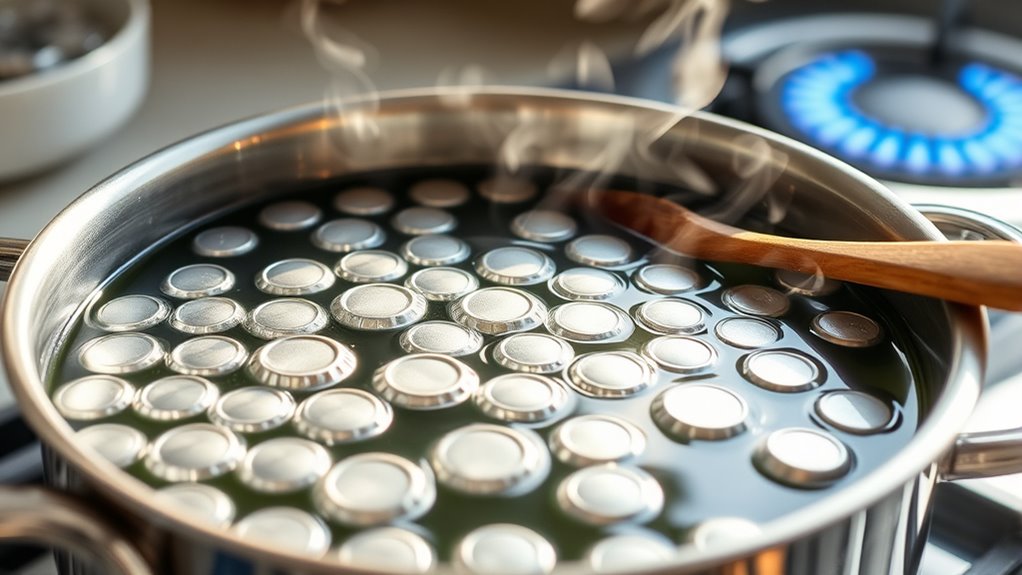
Then, submerge them in a large pot of boiling water for at least 10 minutes, ensuring complete coverage.
The high temperature kills bacteria, wild yeast, and molds instantly.
Once done, let bottles air-cool to prevent contamination and avoid thermal shock.
This chemical-free method is perfect for purists and innovators who want precise control over their brew’s purity—no extra gear, no guesswork. Additionally, boiling is a form of heat sanitizing that is effective for certain metal or glass equipment.
Sanitize Bottles in the Oven Safely
While maintaining a sterile environment is essential for successful home brewing, you can safely sanitize your beer bottles using an oven without the need for chemicals.
Preheat to 350°F, verify bottles are spotless, then place them upright on the bottom shelf. Cover each opening with aluminum foil to preserve sterility during baking. Bake for 90 minutes, then let them cool slowly—ideally overnight—to prevent cracking.
Once cooled, store them sealed until brew day; they’ll stay sterile indefinitely.
- You’re pioneering a chemical-free method trusted by modern brewers
- Imagine opening your oven to perfectly sterilized bottles, ready when you are
- No more last-minute prep stress—efficiency meets precision
- Your future self will thank you when bottling day runs flawlessly. Proper sanitation is vital for preventing contamination that affects flavor and ensuring your beer remains enjoyable.
Use the Dishwasher Only If It’s Truly Sanitizing
Some home brewers find their dishwasher can be a convenient tool for sanitizing beer bottles, but only if used correctly and with the right settings.
Run a pre-rinse cycle to remove residues, ensuring bottles are spotless before sanitizing. Use the sanitize cycle, which reaches high temperatures that kill bacteria effectively. Skip rinse aids—they’re known to hurt head retention.
Even with powerful jets, inspect each bottle; shadows or film mean rewash is needed. Not all dishwashers deliver true sanitation, so verify your model’s specs.
Helpful Hints:
1) Load bottles securely, opening upward.
2) Use a bottle brush if debris lingers.
3) Confirm your dishwasher hits at least 150°F.
Innovate wisely—convenience shouldn’t compromise cleanliness.
Store Clean Bottles Without Recontamination
Once your bottles are fully sanitized, store them upside down to prevent dust or moisture from collecting inside, which could introduce contaminants during brewing.
Cover the openings with aluminum foil or clean caps to block airborne microbes. Keep them in a dry, cool space away from sunlight and humidity.
Use a dedicated container or box to isolate them from kitchen clutter or garage dust. Only handle sanitized bottles with clean hands or gloves to avoid cross-contamination. Additionally, ensure all equipment is thoroughly cleaned and sanitized to minimize the risk of wild yeast contamination that could spoil weeks of work.
Keep bottles isolated in a dedicated container and handle only with clean hands or gloves to prevent contamination.
- Your next batch’s flavor depends on today’s care
- One speck of dust could spoil weeks of work
- Clean storage means confident pours every time
- Precision today powers tomorrow’s perfect brew
Always Sanitize Crown Caps and Corks
Though they’re small, crown caps and corks play a critical role in preserving your beer’s quality, so you should always sanitize them before use.
Even if caps come pre-packed, a quick dunk in sanitizer eliminates potential contaminants. Corks, especially natural ones, can harbor microbes, so soak them in a no-rinse solution for five minutes.
Don’t forget the corker—sanitize its parts too. While infections from unsanitized closures are rare, skipping this step risks off-flavors. Think of it as low-effort insurance. Additionally, using a food-grade sanitizer ensures that no harmful chemicals affect your brew.
Helpful Hints:
- Use food-grade sanitizer like Star San.
- Keep sanitized caps and corks covered until use.
- Store extras properly to maintain cleanliness.
Avoid These 5 Sanitizing Mistakes
One of the most common errors in homebrewing starts right at the beginning: skipping proper bottle preparation before sanitization. You can’t sterilize a dirty bottle effectively—residue hides bacteria, making your effort pointless.
Avoid these pitfalls:
- Leaving behind bleach film that ruins your beer’s taste
- Trusting a dishwasher to sanitize without pre-cleaning
- Letting spotless bottles sit uncovered, inviting contamination
- Overlooking smarter, no-rinse options that save time and reduce risk
Always clean bottles first, rinse bleach twice with hot water, and protect sanitized bottles until use. Remember that proper cleaning techniques not only enhance the safety of your brew but also ensure the quality of the final product.
Innovate beyond tradition: streamline with modern solutions, and keep contaminants out of your craft.
Choose the Right Sanitizer for Your Setup
When choosing a sanitizer for your beer bottles, you need to match the product to your brewing setup and workflow.
If speed matters, Star San is perfect—no rinse, one-minute contact, and highly reliable.
Star San delivers lightning-fast sanitation—no rinse needed, one-minute contact, and trusted by brewers for reliability.
For eco-innovators, VWP (vinegar, water, peracetic acid) tackles microbes effectively in bottles and fermenters.
Milton and bleach work but require thorough rinsing, risking contamination if missed.
Iodine-based options like Videne are potent but can taint flavors if overused.
Prefer heat? Oven sterilize clean bottles at 350°F for 90 minutes—ideal for small batches.
Helpful Hint 1: Always verify no-residue claims before skipping rinses.
Helpful Hint 2: Test sanitizer compatibility with your materials first.
Additionally, using eco-friendly cleaning products not only ensures a clean brewing environment but also supports sustainable practices.
Time-Saving Tips for Bottling Day
You’ve picked the right sanitizer for your brewing setup, whether it’s no-rinse Star San for speed, VWP for eco-efficiency, or oven heat for complete control.
Now streamline bottling day with smart hacks that save time and stress.
- Cut cleanup time by bottling over an open dishwasher to catch spills and access sanitized bottles instantly
- Preserve sterility by covering unused bottles with foil until you need them
- Eliminate recontamination by sanitizing bottles immediately before filling
- Boost speed with a bottle washer, cutting bottling to just 1–1.5 hours
- Invest in a quality rinsing system to ensure thorough cleaning and sanitization, which is essential when using bottle rinser products.
9 comments
Comments are closed.